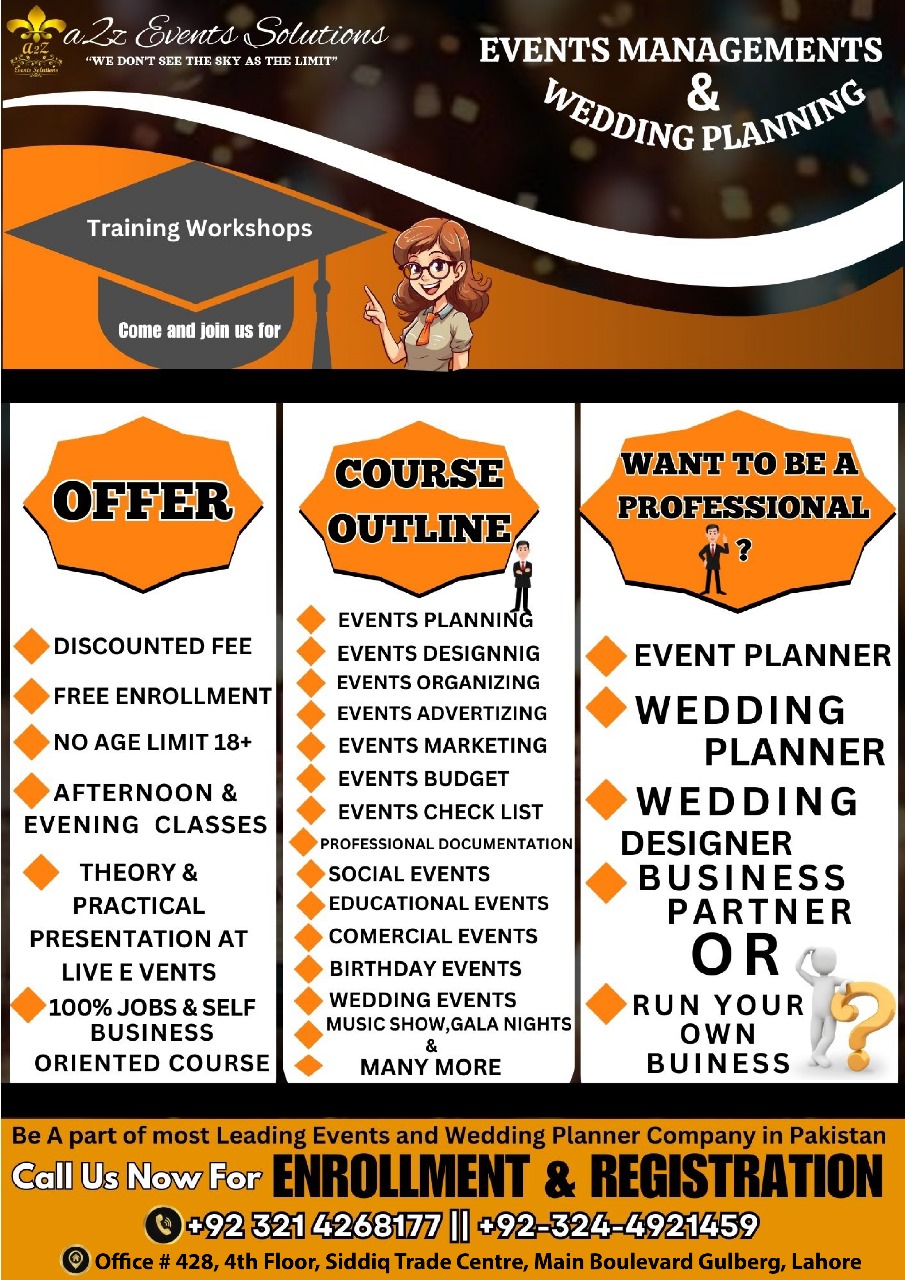
Event management is a creative and growing field that combines planning, organization, communication, decoration, budgeting, and teamwork. Event Management Courses can help students and beginners understand how professional events are planned and managed from the initial idea to the final execution. At A2Z Events Solutions, we believe that practical knowledge and creative thinking are important for anyone who wants to build a future in the event industry.
Understanding the Complete Process Behind Successful Event Planning:
A professional event requires careful planning at every stage. Event management courses introduce learners to important steps such as selecting a venue, preparing schedules, managing guests, arranging suppliers, and coordinating event activities. These skills help learners understand how different parts of an event work together to create a smooth experience.
Developing Creative Ideas for Weddings, Parties, and Corporate Events:
Creativity plays an important role in modern event management. Learners can explore different decoration concepts, themes, color combinations, stage designs, lighting arrangements, and entertainment ideas. Whether it is a wedding, birthday party, corporate gathering, seminar, or product launch, creative planning can make an event more attractive and memorable.
Learning How to Select and Manage the Right Event Venue:
Venue selection is another important part of event planning. A suitable venue should match the event type, guest count, theme, budget, and required facilities. Event management courses can teach students how to evaluate venues, understand layouts, plan seating arrangements, and coordinate setup requirements according to the needs of an event.
Building Strong Budgeting and Event Cost Management Skills:
Managing an event budget requires attention to detail. Learners can develop an understanding of how to divide a budget between decoration, catering, entertainment, venue arrangements, equipment, staff, and other services. Proper budgeting helps event planners organize attractive events while keeping expenses under control.
Improving Communication and Team Coordination for Events:
Successful event management depends on communication between many people. Event planners may work with decorators, caterers, photographers, sound teams, venues, entertainers, and clients. Learning effective communication and team coordination can help future event professionals manage responsibilities clearly and reduce confusion during event preparation.
Understanding Decoration, Stage Design, Lighting, and Event Styling:
Decoration is often one of the most noticeable elements of an event. Training in event management can introduce learners to different decoration styles, stage concepts, floral arrangements, balloon setups, lighting ideas, entrance designs, and table styling. Understanding these elements helps planners create event environments that match the client’s requirements.
Learning Professional Skills for Corporate Events and Business Gatherings:
Corporate events require a professional approach and organized execution. Event management courses can provide knowledge about conferences, seminars, award ceremonies, exhibitions, office events, product launches, and business gatherings. Learners can understand how professional branding, seating, presentations, sound systems, and guest management contribute to a successful corporate event.
Developing Guest Management and On-Site Coordination Techniques:
Guests are an important part of every event. Event planners need to understand registration, invitations, seating, reception areas, guest movement, and general coordination. Practical event management knowledge can help learners respond to common situations and keep the event running according to the planned schedule.
Learning to Work with Vendors and Event Service Providers:
Events often involve multiple vendors and service providers. An event planner may need to coordinate with decorators, caterers, rental companies, photographers, entertainers, transportation providers, and technical teams. Learning vendor management helps future planners compare requirements, communicate expectations, monitor services, and maintain professional relationships.
Building Confidence for a Future Career in the Event Industry:
Event management courses can help learners develop confidence in planning, communication, creativity, organization, and problem-solving. These skills can be useful for people interested in becoming event planners, coordinators, wedding planners, corporate event professionals, or starting their own event-related businesses.
Why Practical Event Management Knowledge Matters for New Professionals:
Learning the theory of event planning is useful, but understanding how those ideas work in real situations can make a significant difference. Practical knowledge helps learners understand deadlines, client expectations, supplier coordination, unexpected changes, and the importance of teamwork. These experiences can prepare beginners for the responsibilities of working in a professional event environment.
Start Exploring Professional Event Planning with A2Z Events Solutions:
A career in event management can combine creativity with organization and professional communication. Event Management Courses can provide a useful foundation for people who want to understand this exciting industry. A2Z Events Solutions brings experience in planning and managing weddings, corporate events, parties, celebrations, and other occasions across Lahore and Punjab. With the right knowledge, practical exposure, and creative approach, aspiring event professionals can develop the skills needed to plan organized and memorable events.